Start outside the website: Google Business Profile
For a local business, the first result people see is often not a website at all but the map with a short list of businesses. That list comes from Google Business Profile, a free listing you claim and fill in yourself: name, address, phone, opening hours, photographs and the category you work in.
Keep the name, address and phone number exactly the same everywhere they appear — on the profile, on the website, on social networks. Small differences make it harder for Google to be sure that all of them describe the same business. Link the profile to the website, and keep the hours up to date on holidays.
Tell Google the site exists: Search Console and a sitemap
Google Search Console is a free tool that shows how Google sees your website: which pages it has found, which it has indexed (stored so they can appear in results), which searches showed your site and how often people clicked.
A sitemap is a simple file that lists every page you want to be found. Submitting it in Search Console is like handing an inspector the list of rooms instead of letting them search the corridors. For a new page you care about, Search Console also lets you request indexing directly.
Search Console is also where problems show up: pages Google could not reach, pages it decided not to index and pages that redirect somewhere else. Looking at it once a month is enough for most small businesses.
Titles and descriptions: the line people actually read
Every page has a title and a short description that are not visible on the page itself but appear in search results. The title is the blue line people click; the description is the text under it. Together they are your shop window on Google.
A good title says what the page is about and, for a local business, where: the service and the city, followed by your name. A good description says in one or two sentences what someone will find on the page. Each page needs its own — if every page has the same title, Google has no way to tell them apart.
One page for each thing you do
People search for specific things: a website for a dental practice, an online shop, an apartment in a particular part of town. If everything you offer is squeezed onto one page called “Services”, there is nothing specific for Google to show.
Give each service its own page with its own title, a clear explanation and examples. On this website the case studies and service pages each have their own address for exactly this reason. A dedicated page also helps the visitor: it answers their question instead of making them search through a list.
Local pages, done honestly
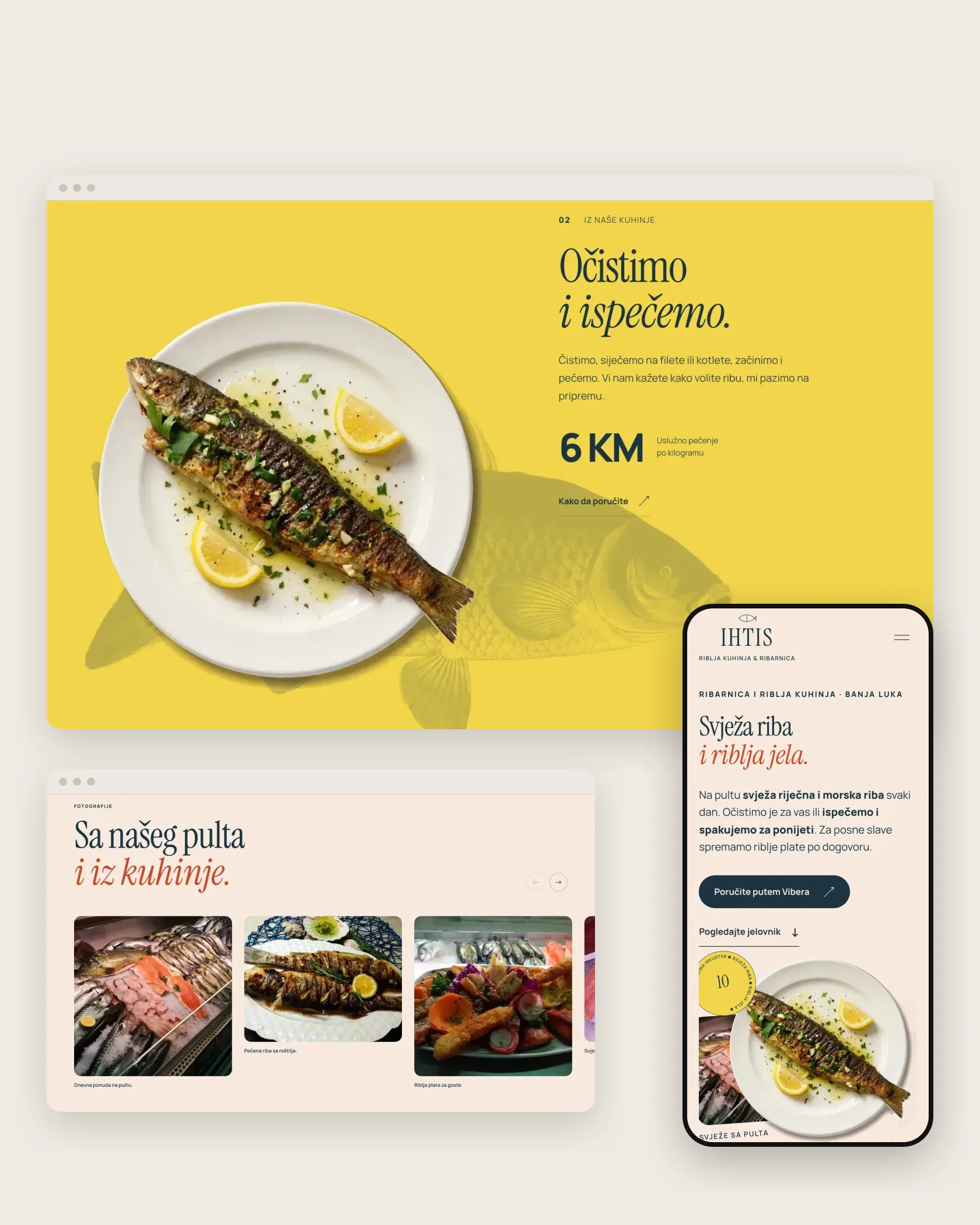
If you work in one city, say so plainly — in the title, in the text and in your contact details. A fishmonger at the Banja Luka city market, like Ihtis, belongs to Banja Luka, and the website says so.
Resist the temptation to copy the same page twenty times with only the city name changed. Search engines treat such pages as spam, and visitors notice too. Create a page for a place only when you genuinely work there and have something specific to say about it.
Speed and the phone
Many people will see your website on a phone, often on a mobile connection. Google evaluates the mobile version of a site, and a page that takes too long to appear loses visitors before they read a word.
The usual causes are simple: oversized photographs, too many external scripts and fonts, and effects that run before the content is ready. Compressed images in a modern format, sizes that match the screen and content that appears first make a bigger difference than any trick.
Content that answers real questions
Think about the questions customers ask you on the phone or in person: what is included, how it works, what they need to prepare, whether you deliver, how to order. Each of those is a sentence someone is typing into Google.
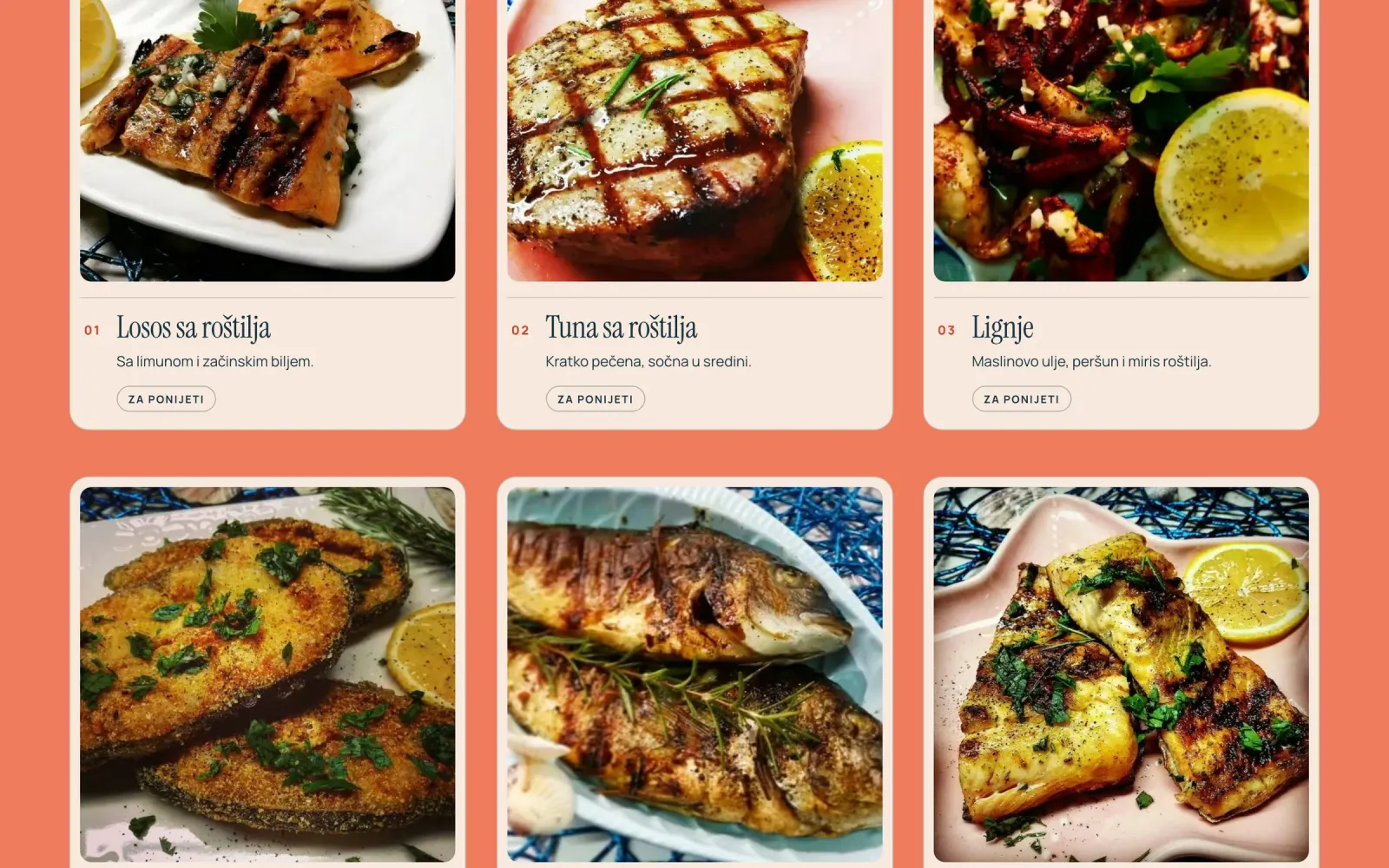
Answer them on the website in plain language. A short, honest answer to a real question is worth more than a long text written for search engines. On Ihtis, for example, the website explains what is fresh today, how fish is prepared and how to order through Viber — exactly what a customer wants to know.
Links: who points to you
Google also looks at which other websites link to yours. A link from a relevant, real source works like a recommendation: a local business directory, an association you belong to, a partner, a supplier, a newspaper article about your work.
Start with the places that already know you. If someone built your website, a small “made by” credit is normal; if you sell through others, ask them to link to your site; keep your profiles on social networks pointing to the same address. Avoid anyone who sells links in bulk — those do more harm than good.
Links inside your own website matter as well. Each service page should link to related work and to the articles that explain it, so both visitors and Google can move from one to the next.
Telling Google what the page is
Beyond the visible text, a page can include structured data: a short, standardised description that tells search engines this page is a business, this one is a service, this one is an article written on a particular date. It does not change how the page looks, but it removes guesswork.
Images deserve the same care. A short description of each image — what it shows, not a list of keywords — helps people who use screen readers and helps Google understand photographs it cannot otherwise read.
Reviews from real customers
Reviews on Google Business Profile influence both whether you appear on the map and whether people choose you once they see you. Ask satisfied customers directly, after a job is done, and make it easy by sending them the link.
Reply to reviews, including critical ones, calmly and specifically. Never buy reviews or write them yourself: it breaks Google’s rules, and fake praise is easy to spot.
Honest expectations about time
Search engines need time to discover a new page, understand it and decide where it belongs. A new website rarely appears at the top of results the day after it goes live, and nobody can honestly promise a particular position.
What you can control is the groundwork: a profile that is complete and correct, a site Google can read, a page for each thing you do and answers to the questions people ask. If you want a website built with this from the start — or want to know what your current one is missing — write to me.